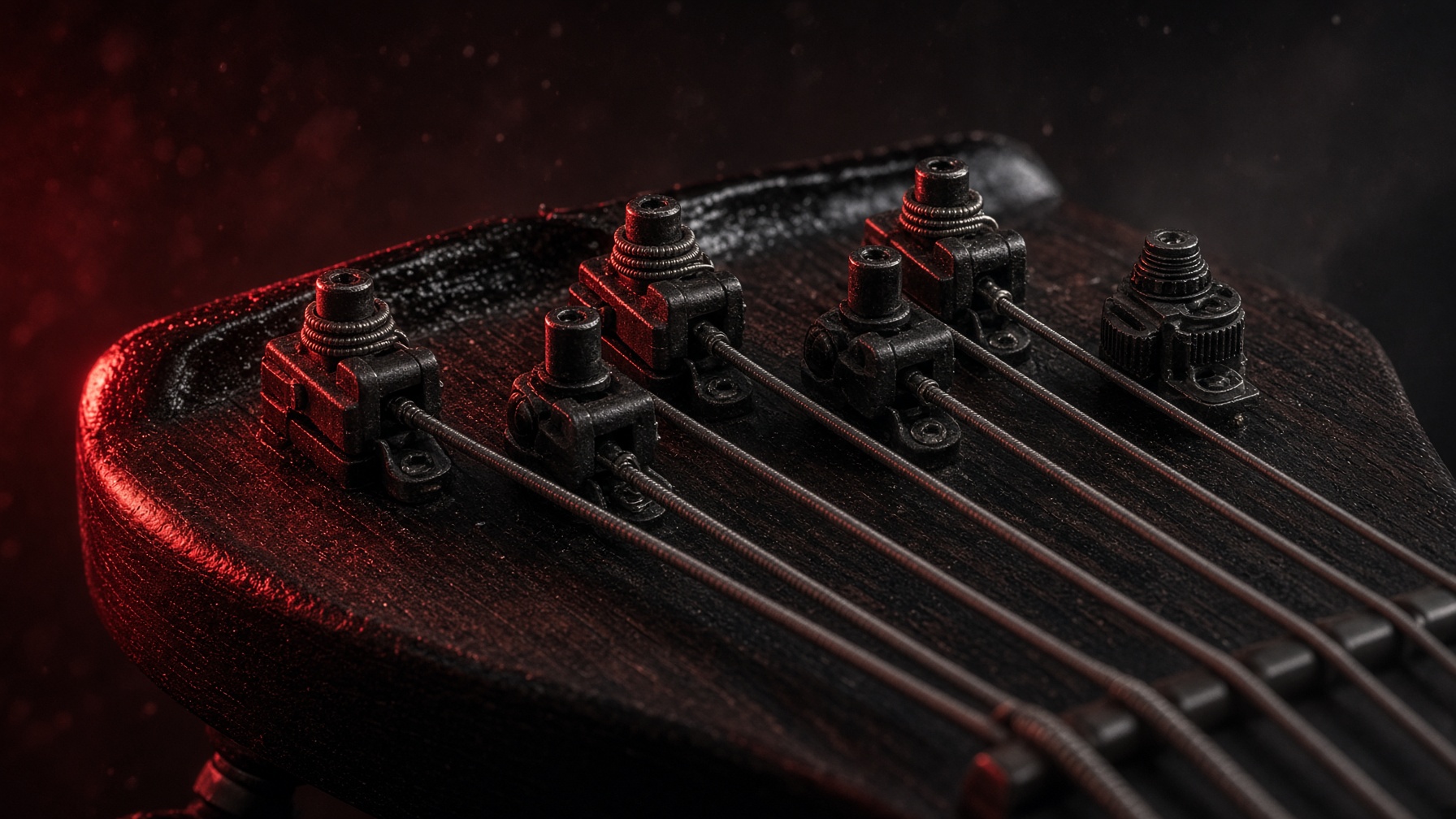
Gauge, intonation, and action so Drop C and Drop B actually stay in tune under a palm mute.
Drop tuning is not standard tuning with one string lowered. That string is now a bass. If the gauge, relief, and intonation still think they are in E, the riff will sound like a dying radio.
Pick a tuning and commit
Metalcore lives in Drop C and Drop C#. Prog metal often sits in Drop B or Drop A on a baritone. Pick one for a month. Switching every session means you never learn where the shapes sit in your hand.
- Drop D (DADGBE) — 10–52. Fine for learning shapes.
- Drop C# — 11–54. A common recorded metalcore spec.
- Drop C (CGCFAD) — 11–56 or 12–60. The default on a 25.5" scale.
- Drop B — 12–60 minimum, 13–62 better. 26.5"+ scale preferred.
- Drop A — baritone scale, 13–68 or a dedicated baritone set.
Intonate the sixth string last
Tune to pitch, then check the 12th-fret harmonic against the fretted 12th on every string. The dropped string is the one that usually lies. Move the saddle back if the fretted note is sharp, forward if flat. Retune after every saddle move.
Action can sit a little higher than a shred setup. You are hitting hard. If the sixth string rattles against the frets when you chug, raise it a quarter-turn before you dump the gain.